
Cami
Turkish · Arabic jāmiʿ
Turkish for mosque. More precisely, a mosque where Friday prayer is held. The word means “the one that gathers”. A small prayer room without Friday prayer is called a mescit in Turkish.

 1234
Turkish · Arabic jāmiʿ
Turkish for mosque. More precisely, a mosque where Friday prayer is held. The word means “the one that gathers”. A small prayer room without Friday prayer is called a mescit in Turkish.
Arabic miḥrāb · Turkish mihrap
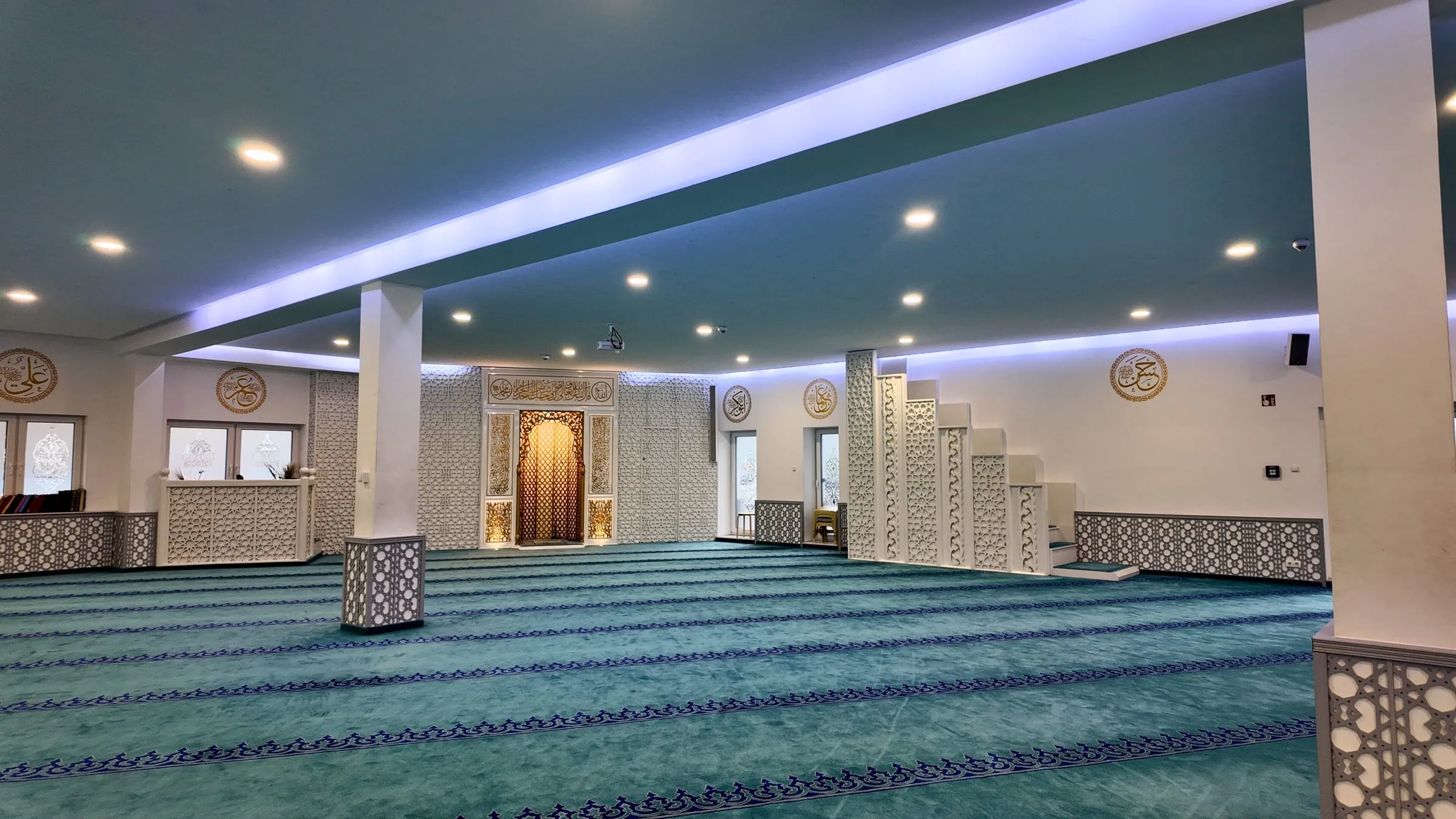
The niche in the wall that shows the direction of prayer towards Mecca. In congregational prayer the imam who leads the prayer stands in front of it. In our mosque it has a golden frame.
Arabic minbar · Turkish minber
The pulpit with the long staircase next to the mihrab. From here the imam gives the sermon at Friday prayer and on festival days.
Turkish · calligraphy panel
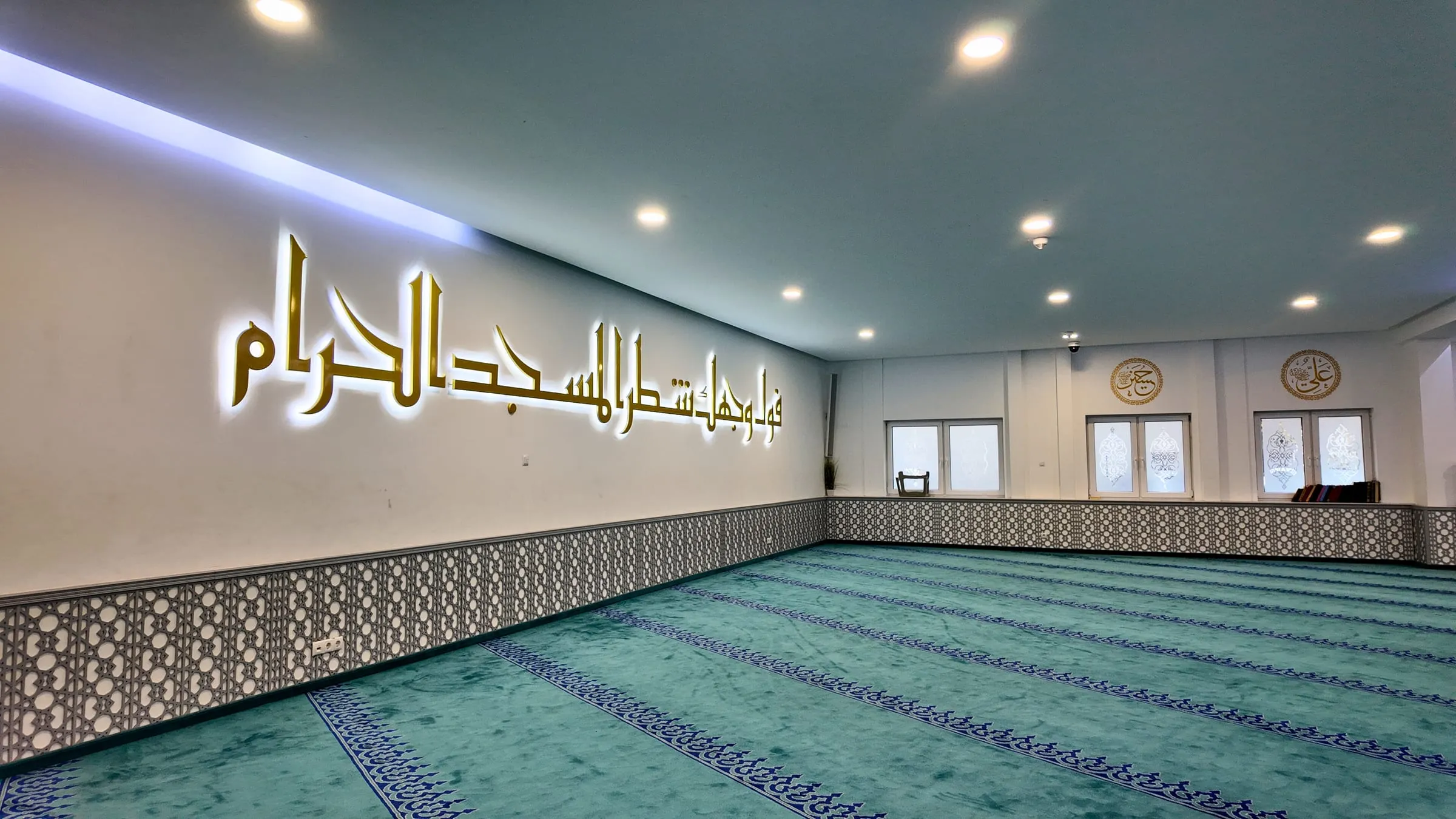
Round panels with names in Arabic calligraphy (hat). In many Turkish mosques they show Allah and the Prophet Muhammad. There are also the first four caliphs Abu Bakr, Umar, Uthman and Ali, and the Prophet’s grandsons Hasan and Husayn.
Turkish · Arabic kursī
A raised seat or lectern from which the imam gives talks and lessons. The Friday sermon, by contrast, is given from the minbar.
Arabic qibla · Turkish kıble
The direction of prayer towards the Kaaba in Mecca. From Hamburg it lies roughly to the south-east. The whole room is aligned with it.
Turkish seccade (a single prayer mat)
During prayer the forehead, hands and knees touch the floor. That is why you only step onto the carpet without shoes. Its stripes mark the rows in which people pray shoulder to shoulder. The rows are called saf.
Arabic imām
Leads the congregational prayer, gives sermons and lessons, and is the person to talk to about religious questions and pastoral care.
Arabic muʾadhdhin · Turkish müezzin
Gives the call to prayer (adhan) and supports the imam during congregational prayer.
Arabic jamāʿa · Turkish cemaat
The community of people who pray, and also the congregational prayer itself. In our mosque it starts at the times in the prayer calendar. For Fajr we pray together half an hour before sunrise.
Arabic ṣalāt · Turkish namaz
The ritual prayer, five times a day. It follows a fixed sequence of standing, bowing, prostrating and sitting.
Arabic adhān · Turkish ezan
The call to prayer in Arabic. It invites people to each of the five prayers.
Arabic wuḍūʾ · Turkish abdest
The ritual washing before prayer. You wash your hands, mouth, nose, face, arms and feet, and wipe your head with wet hands. Mosques have their own washrooms for this.
Turkish Cuma namazı
The congregational midday prayer on Friday, with a sermon. It is the most important congregational prayer of the week.
Arabic khuṭba · Turkish hutbe
The sermon at Friday prayer and on festival days. The imam gives it from the minbar.
Turkish tesbih
A string of prayer beads, usually 33 or 99, used to count words of praise to God.
Arabic ramaḍān · Turkish Ramazan
The month of fasting. From dawn until sunset Muslims do not eat or drink. The Islamic calendar follows the moon, so Ramadan starts about eleven days earlier every year.
Turkish sahur, imsak, iftar
Suhoor is the meal before dawn. The fast begins at imsak. It is broken at sunset with iftar, often together in the mosque.
Turkish bayram
A festival day. The two great festivals are Eid al-Fitr (Ramazan Bayramı) at the end of the month of fasting and the Festival of Sacrifice, Eid al-Adha (Kurban Bayramı).
Turkish
Five special nights in the Islamic year, for example the night of the Prophet Muhammad’s birth (Mevlid Kandili). The name comes from the oil lamps that used to light up mosques on these nights.